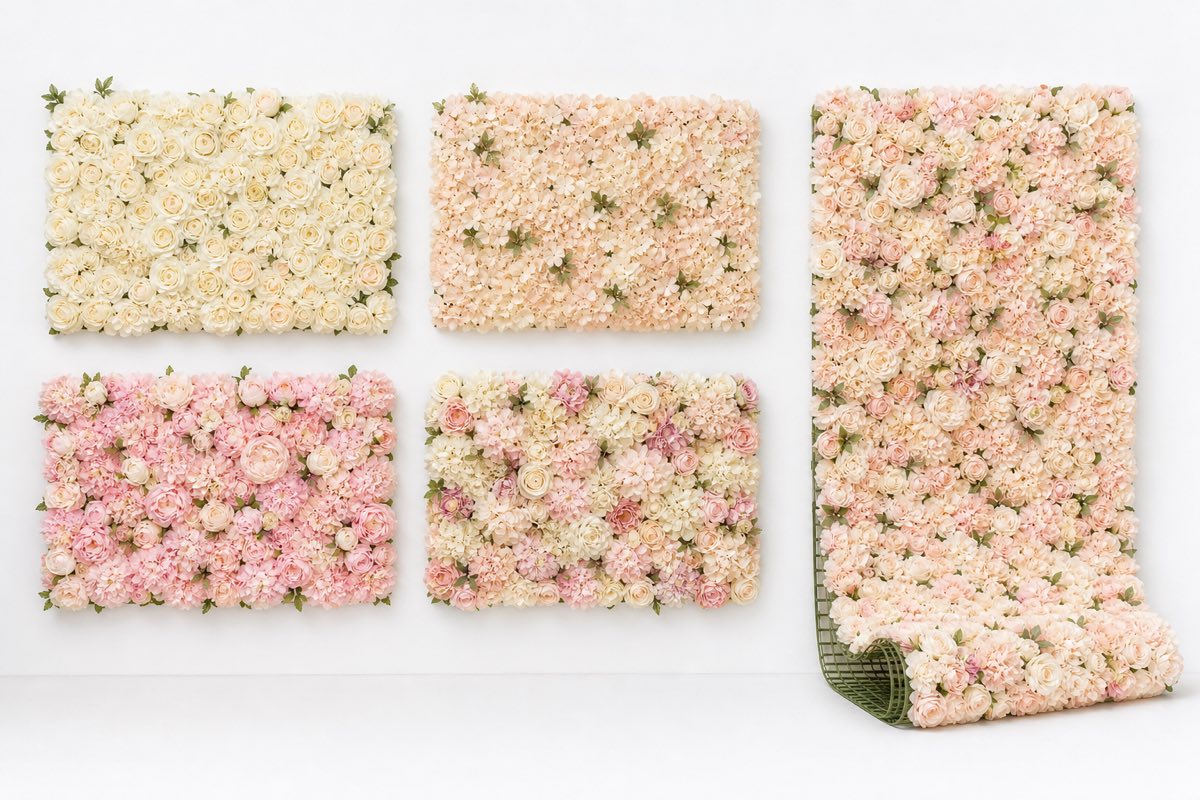
Artificial flower walls can look similar in a small image while using different formats, flower ratios and coverage levels. Buyers comparing wholesale or project quotations should define what the finished backdrop must do, then use the VERDILORA flower wall and backdrop family as a product direction rather than treating one image as a complete specification.
1. Start with the business use
State whether the wall is for event-rental inventory, a wedding installation, a venue photo area, retail display or resale. Add the main viewing distance, expected camera use and whether guests will see the sides or back. These conditions affect how important close-range detail, edge coverage and repeatability are to the buyer.
The visual brief describes the intended look. The commercial brief adds quantity, destination, timing, packing, repeat-order needs and the approval process.
2. Define finished coverage before choosing a format
List the finished width and height of every wall or backdrop, plus the number of identical sets required. VERDILORA's current range includes 40 × 60 cm modules and a 1 × 2 m format direction. Ask the supplier to identify the proposed route and show how the quoted quantity reaches the finished coverage.
If a local frame or support structure is already selected, provide its usable face dimensions rather than its overall outer dimensions. Mark openings, curves, corners and any area that should remain uncovered. The local installer or rental team should confirm how the selected product will be supported and secured for the actual venue.
3. Specify the floral recipe, not only the colour
A useful brief names the preferred flower direction—such as rose, hydrangea, peony or mixed heads—and describes the intended balance. If several references are supplied, annotate what matters in each one: dominant flower, secondary flower, colour balance, leaf visibility or overall texture.
For a custom palette, provide colour references under neutral light where possible. Avoid relying on colour names alone. Ask the quotation to state whether palette, flower ratio and density follow a standard direction or require a custom sample.
4. Make density reviewable
“Full” and “luxury” are subjective. Review density through straight-on photographs, angled views and a known sample area. Look at visible backing, transitions between flower types and how the surface reads at the project's normal viewing distance.
For repeated modules, also review the assembled pattern. A good individual panel can still create obvious blocks or repeated clusters when several pieces are placed together. Ask how orientation and module rotation are intended to work before final approval.
5. Agree the edges and camera-facing details
Confirm whether the installation is viewed only from the front or from multiple sides. Ask how top, bottom and side edges are expected to finish and whether additional pieces are needed for returns or exposed frame areas. For photo backdrops, review the likely camera crop and subject position so the approved sample reflects the most important part of the finished wall.
6. Approve a physical sample in a controlled sequence
Use the artificial plant sample approval checklist to record the approved palette, flower types, ratio direction, density, backing, connection details and workmanship. Photograph the sample under consistent lighting and keep one approved reference for production comparison.
If the order includes several colourways or wall designs, assign a code to each approved version. Do not assume that approval of one palette confirms every other combination.
7. Plan packing around handling and identification
Tell the supplier whether the goods will go to one venue, several project zones, rental branches or resale locations. Agree carton marks, set quantities and design codes before production. Ask how the proposed format will be packed and what reshaping or preparation may be needed after unpacking.
For mixed orders, keep each design and colourway identifiable on the packing list and carton labels. This makes receiving, counting and routing easier without inventing product-specific handling assumptions after arrival.
What to send for the first quotation
- Buyer type and intended use: rental, project, venue, retail or resale.
- Finished width, height, number of sets and destination.
- Preferred 40 × 60 cm module or 1 × 2 m format direction, if known.
- Flower direction: rose, hydrangea, peony or mixed heads.
- Annotated palette, flower-ratio and density references.
- Viewing conditions, exposed edges and any known frame dimensions.
- Sample, approval, carton-mark and packing requirements.
- Target timing and any documents that must be reviewed before order confirmation.
The goal is not to settle every detail in the first email. It is to make the product and commercial assumptions visible enough that suppliers quote the same requirement—and that the buyer knows what must be approved next.