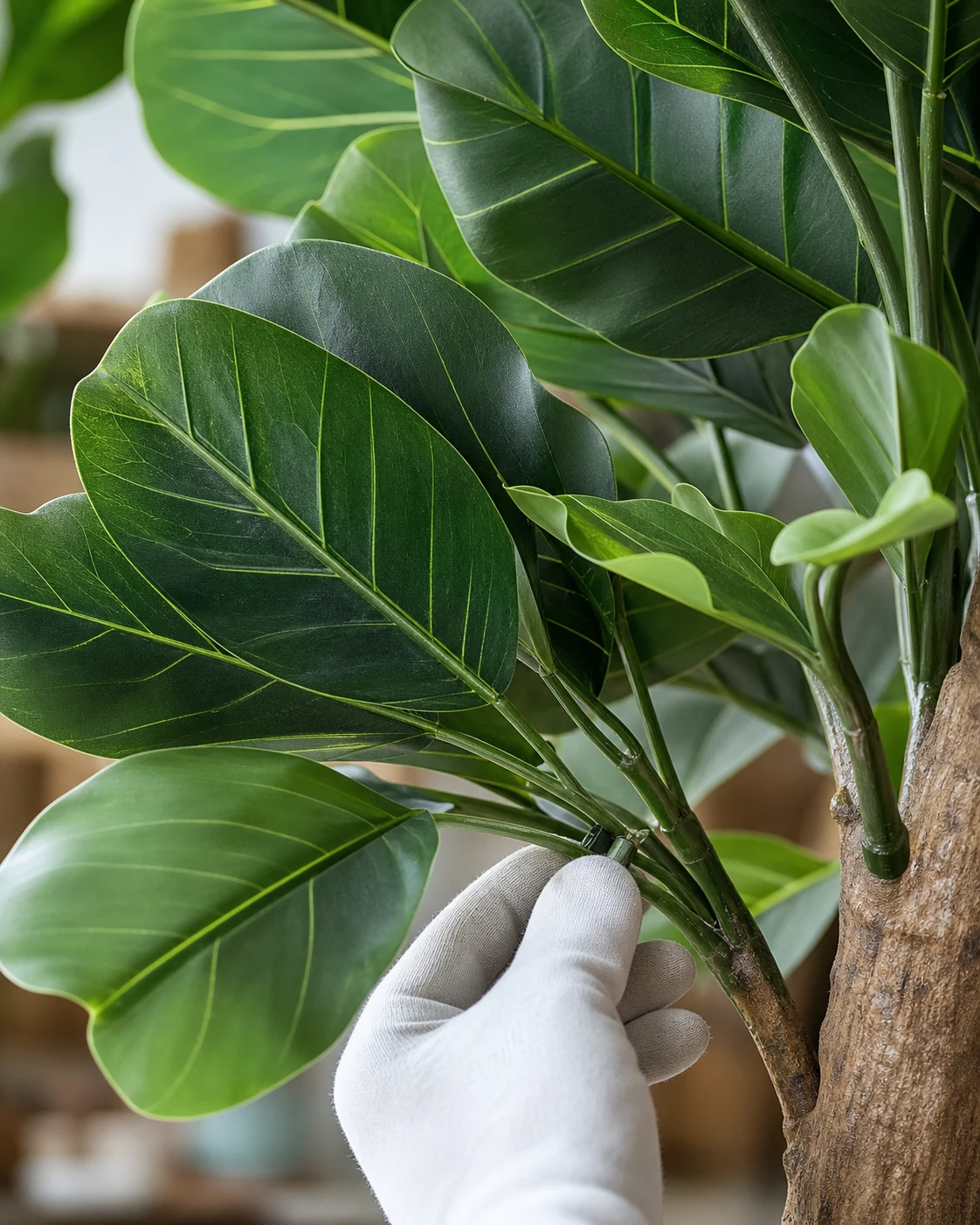
Commercial artificial greenery orders often involve more variables than the product name suggests. Two “180 cm ficus trees” may differ in canopy width, leaf material, trunk character, branch attachment, inner pot and carton method. The approved sample should convert those visual choices into an agreed production reference. Buyers working with smaller commercial greenery can first use the 60, 90 and 120 cm artificial potted plant selection guide to define the placement and size direction.
1. Record the overall dimensions
Measure total height, maximum canopy width, exposed trunk height and inner-pot size. Note whether branches were shaped for photography or measured immediately after unpacking. A simple dimension drawing prevents different interpretations later.
2. Review foliage and colour in useful light
Check the leaf surface, edge finish, vein detail, colour variation and gloss under daylight and the likely project lighting. Photograph the approved sample with a neutral reference and record any acceptable colour tolerance.
3. Check trunk and branch construction
- Trunk material, finish and visible joining points.
- Branch density, attachment method and safe shaping range.
- Two-section trunk or plug-in components and their assembly sequence.
- Stability in the supplied inner pot and the intended decorative planter.
Product photography helps shortlist options, but production should follow an identified sample plus written dimensions, materials and packing details.
4. Confirm branding and labels
Freeze the brand name, label size, barcode, carton marks, warning text and country-specific information. Confirm placement with a marked image or artwork proof rather than a general instruction.
5. Test the packing method
Review how the canopy is compressed, which parts are protected, how assembly components are secured and whether a shaping guide is needed. Record carton dimensions, gross and net weight, units per carton and drop-test or handling requirements where applicable.
6. Define the batch inspection points
The approval record should state which characteristics are critical: total height, canopy width, leaf count or density direction, colour reference, assembly, stability, label, carton and accessories. Also state who approves changes if a material or construction becomes unavailable.
A concise approval pack
- Sample code and approval date.
- Front, side, detail and packed photographs.
- Dimension and material sheet.
- Branding and carton artwork.
- Assembly and shaping instructions.
- Critical batch-check list.
Keeping this pack concise makes it more likely that sales, production, inspection and the buyer are all checking the same reference.