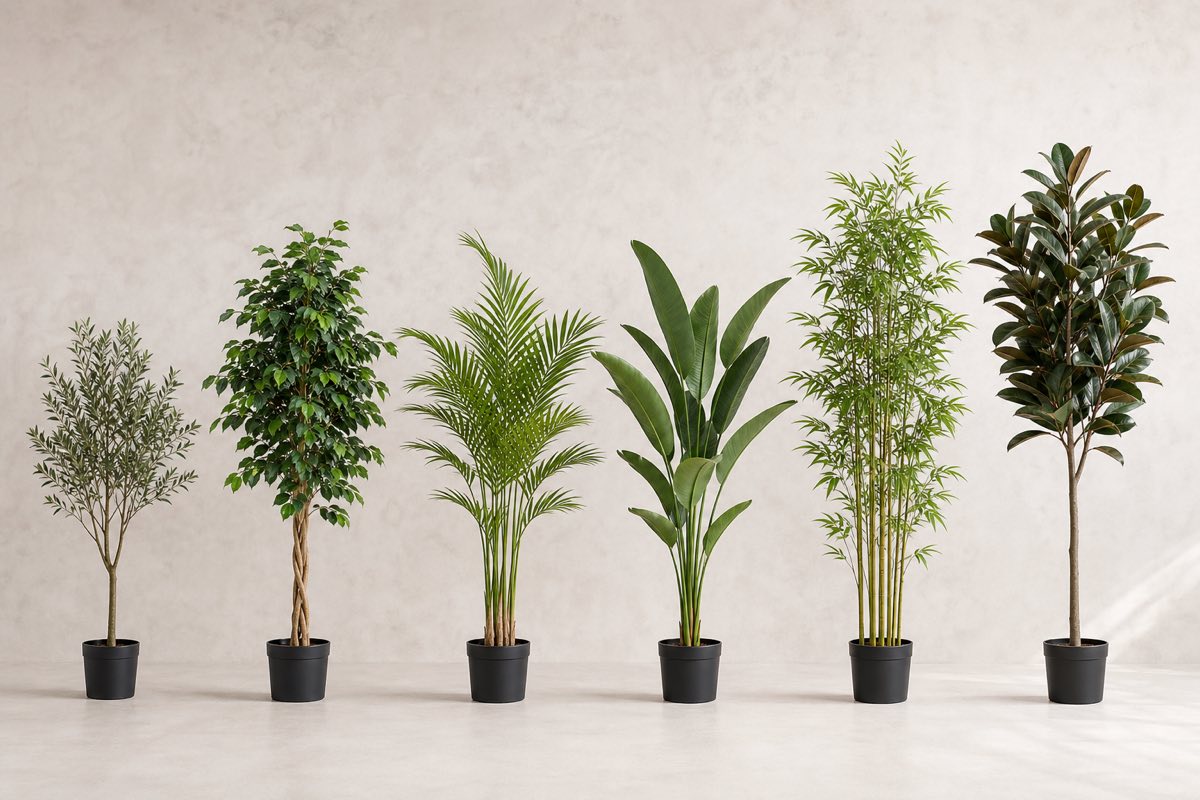
For hotels, restaurants, offices and retail spaces, medium artificial trees are often easier to specify and repeat than oversized project trees. They provide visible greenery without turning transport, access and installation into a separate construction project. Hotel buyers can also use the hotel artificial greenery project brief to map each size direction to reception, seating, corridor and dining zones.
Start with the viewing condition
A tree viewed from three metres away needs a stronger silhouette than one placed beside a lounge chair. Before choosing a height, note the main approach direction, typical viewing distance and whether people will see the canopy at eye level or from below.
- 150 cm: useful beside seating, at corridor transitions and in smaller retail or office zones.
- 180 cm: a balanced all-round direction for reception areas, restaurants and hospitality interiors.
- 210 cm: suitable where ceilings, entrances and wider sightlines need more vertical presence.
Ask for overall height, maximum canopy width, exposed trunk height and planter dimensions on the same specification sheet.
Check ceiling and furniture scale
Leave enough visual space above the canopy. A tree that nearly touches a ceiling can feel compressed even when it technically fits. Also compare the canopy with nearby counters, sofas, display units and doors. The plant should anchor the zone, not block circulation or signage.
Treat the planter as part of the product
The same tree can look under-scaled in a narrow nursery pot and well-proportioned in a wider decorative planter. Confirm whether the quotation includes an inner pot, a finished planter or only the tree. If a local planter will be used, share its internal dimensions and required fixing method. For lower size directions, compare the separate 60, 90 and 120 cm medium potted plant guide.
Review construction and access
Medium floor trees may use a two-section trunk or plug-in branches to reduce carton size. That affects installation time, branch recovery and the final silhouette. Check lift size, door width and the distance from unloading point to final placement before approving the construction.
What to send in the first brief
- Application and placement photographs or drawings.
- Preferred height direction: 150, 180 or 210 cm.
- Target quantity and whether styles may be mixed.
- Destination country and required timing.
- Indoor or protected-outdoor use, plus any document requirements.
- Planter, branding and packing expectations.
A clear first brief does not need to contain every technical answer. It needs enough context for the supplier route and sample questions to be useful.