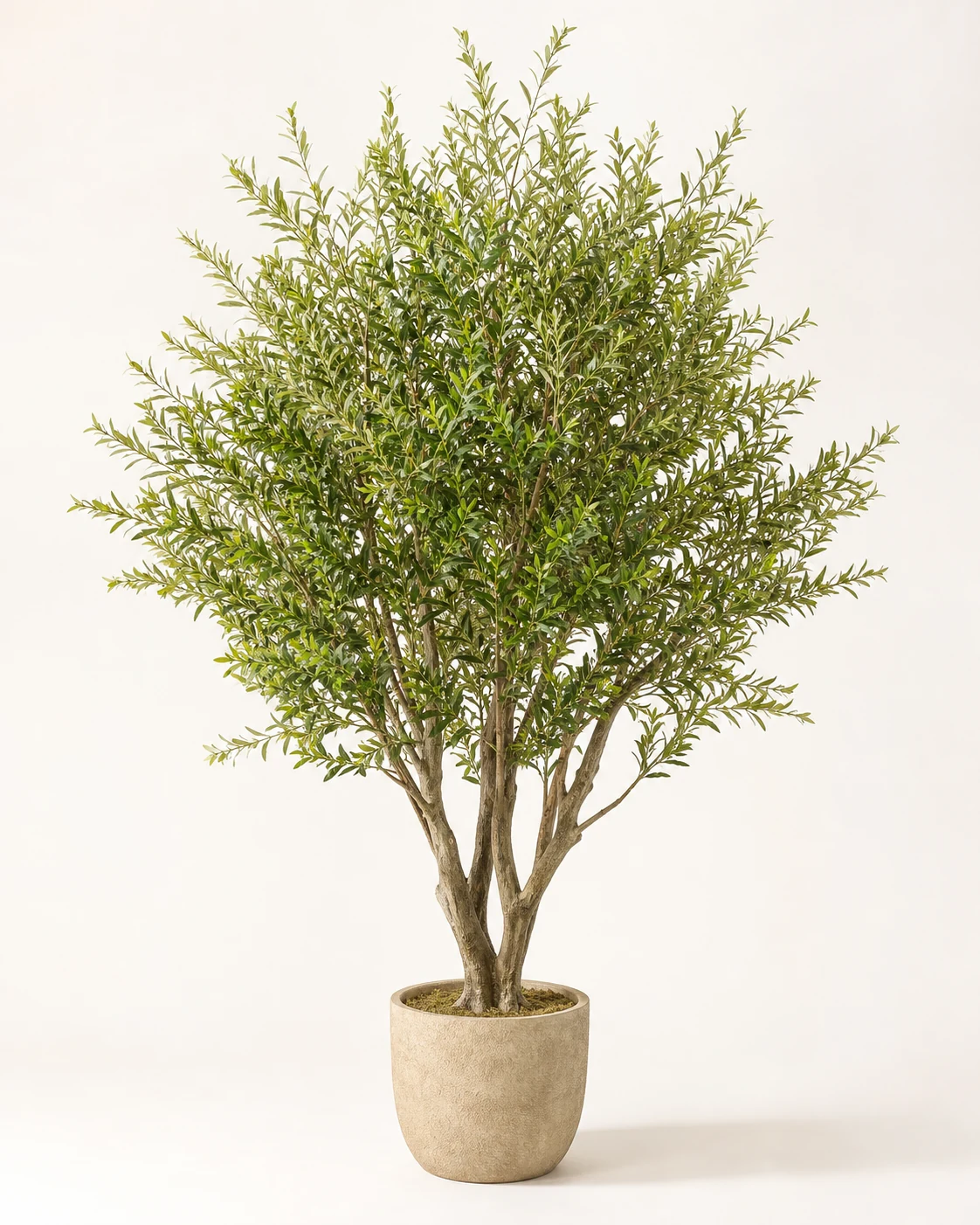
When buyers search for artificial olive trees wholesale, the visible style is only one part of the buying decision. Hotels, restaurants, offices, retail spaces and wedding suppliers also need a repeatable specification that can be sampled, packed and compared across quotations.
1. Start with the commercial application and height direction
VERDILORA’s current medium floor-tree directions are 150, 180 and 210 cm. Choose a starting height using ceiling clearance, viewing distance, nearby furniture, access routes and the intended planter—not height alone.
- 150 cm direction: consider it for seating zones, smaller retail displays and office areas where the canopy will be viewed nearby.
- 180 cm direction: a useful starting point for reception areas, restaurants and hospitality interiors needing visible but manageable greenery.
- 210 cm direction: review it where entrances, taller ceilings or longer sightlines need more vertical presence.
These are quotation directions rather than promises that one construction suits every site. Share placement photos or drawings and check the complete dimensions on the approved specification.
2. Specify foliage, trunk and silhouette
“Olive tree” does not define one appearance. Reference the overall canopy shape, maximum width, foliage density, leaf colour direction, visible branch spacing and exposed trunk height. If the tree is viewed from several sides, request front and side references instead of approving a single hero image.
Put overall height, maximum canopy width, exposed trunk height and inner-pot dimensions on the same specification sheet. Photographs then support the dimensions instead of replacing them.
3. Separate the inner pot from the decorative planter
The inner pot supports transport and stability; the decorative planter shapes the finished interior. Confirm which one is included in the quotation. When planters will be sourced locally, share their internal dimensions, desired finished height and the intended fixing or filling method so the proportions can be reviewed together.
4. Compare one-piece and sectional construction with packing in mind
A medium artificial olive tree may follow a one-piece or sectional route depending on the approved construction. The choice can affect carton length, visible joints, on-site assembly and the amount of canopy shaping after unpacking. Ask to review the assembled result and the packed sample before fixing the route.
Do not compare carton size in isolation. A smaller pack may need more recovery work at destination, while a larger pack may preserve the approved silhouette more easily. The relevant comparison is packed volume, protection, assembly steps and recoverability together.
5. Approve a representative sample
Use the sample to freeze the details that matter to the order: overall dimensions, foliage colour and density, trunk appearance, branch positions, pot, construction joints, shaping method and packed presentation. Keep an approved photo set and written specification so later checks use the same reference.
For a fuller review sequence, use the artificial plant sample approval checklist. If shipment volume or site setup is important, also review the export packing guide for medium artificial trees.
6. Send a quotation brief that suppliers can answer clearly
- Application, destination market and placement images or drawings.
- Target quantity and preferred height direction: 150, 180 or 210 cm.
- Canopy, foliage and trunk references, including front and side views where needed.
- Required inner pot and whether a decorative planter is included or sourced locally.
- Preferred construction route, or a request to compare one-piece and sectional options.
- Sample approval requirements and the details that must remain consistent.
- Packing, carton marks, assembly guidance and any agreed document requirements.
- Requested commercial timing for the supplier to confirm in the quotation.
A focused brief makes commercial artificial olive trees easier to compare on the same basis. It also reduces the risk that two visually similar quotations include different construction, planter or packing assumptions.